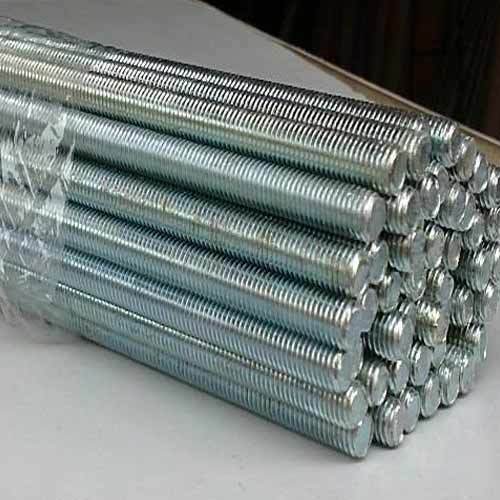
Threaded rods are long, cylindrical metal rods with helical grooves (threads) running along their length. They are commonly used in construction manufacturing, and various DIY projects. Here are some key points about threaded rods
Types
- Materials: Common materials include steel, stainless steel, and brass. The choice of material affects strength, corrosion resistance, and suitability for different environments.
- Thread Types: There are various thread standards, such as UNC (Unified National Coarse), UNF (Unified National Fine), and metric threads
Uses
- Fastening: Used to join multiple parts together, often with nuts and washers
- Support Structures: Used in construction for tensioning and bracing
- Machinery: Commonly found in machinery and equipment for adjusting or securing components
Installation
- Cutting: Threaded rods can be cut to the desired length
- Nuts and Washers: Typically paired with nuts and washers to distribute the load and provide a secure fit
Advantages
- Strength: Provide high tensile strength, making them suitable for heavy loads
- Versatility: Can be used in a variety of applications and industries
- Customizability: Easily cut to length and can be used with different types of fasteners
If you have any specific questions about threaded rods or their applications, feel free to ask